
50/50 Timesharing Is Not One-Size-Fits-All
In Florida, equal timesharing is common. But common does not mean automatic, and it definitely does not mean appropriate in every situation.
The right 50/50 schedule depends on three major factors: the child's age, the parents' conflict level, and the family's practical realities. What works beautifully for a toddler may be a disaster for a teenager. And what works in a cooperative coparenting dynamic may implode in a high-conflict one.
Let's break down the three most common equal timesharing structures.
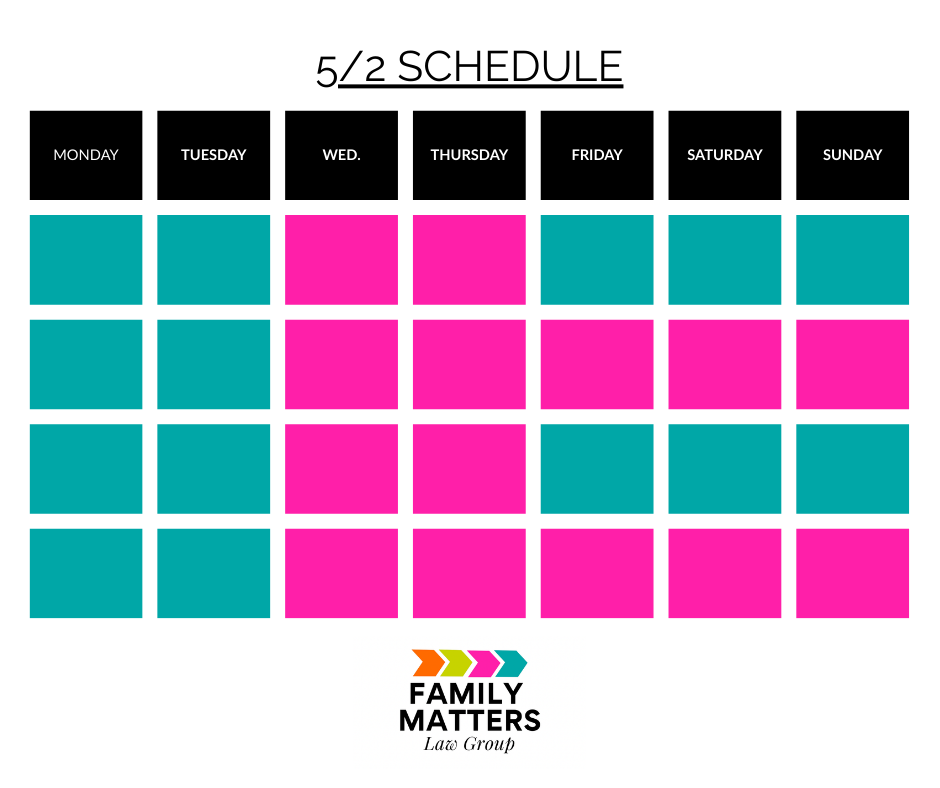
The 5/2 Schedule (Often Best for Children Under 12)
In a true 5/2 structure, one parent has Monday and Tuesday every week. The other parent has Wednesday and Thursday every week. The parents alternate weekends.
This model provides consistent weekdays. Every Monday and Tuesday look the same. Every Wednesday and Thursday look the same. That predictability is incredibly helpful for elementary-aged children.
Homework routines stabilize. After-school activities are easier to manage. There is less rotating weekday confusion compared to other models.
For children under 12, that kind of structure often supports emotional regulation and academic consistency.
It may not work well if one parent cannot reliably manage weekday responsibilities due to work schedule or chronic instability. Both parents must be capable of handling school-week structure.
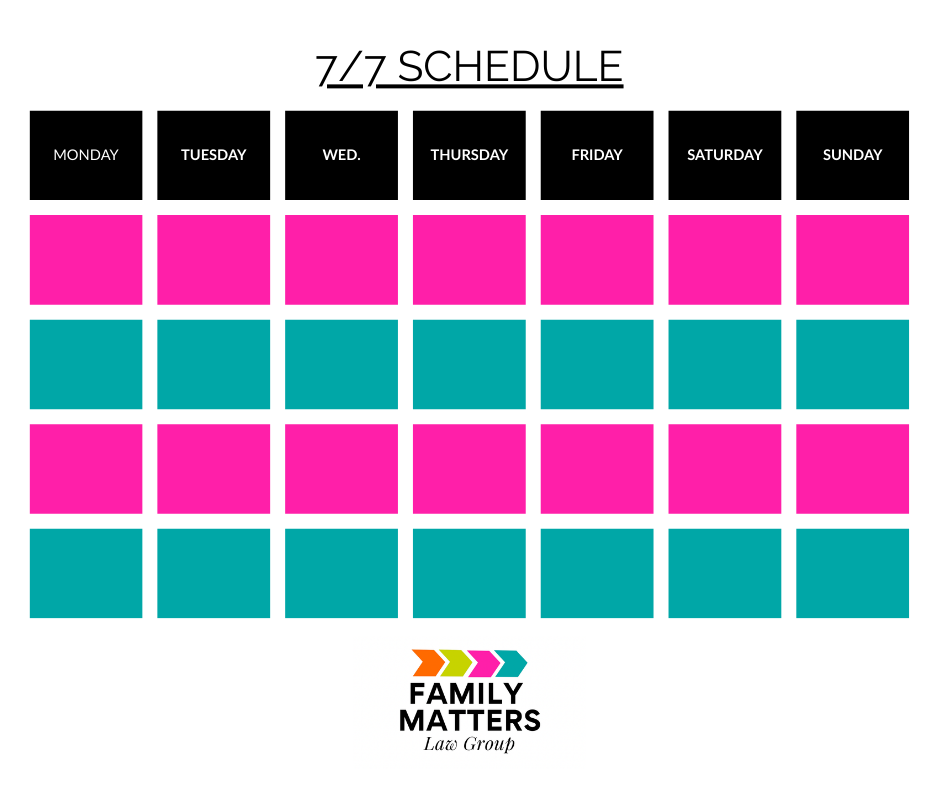
The 7/7 Schedule (Often Best for Children Over 12)
This is alternating weeks. One parent has the child for seven consecutive overnights, then the other parent has the next seven.
It is simple. It reduces exchanges to once per week. That reduction alone can significantly lower stress in high-conflict cases.
Teenagers generally tolerate longer stretches away from each parent. They are more independent, socially driven, and capable of managing extended blocks of time. The simplicity of alternating weeks often aligns well with adolescent life.
For younger children, however, seven days can feel long. Attachment needs are different in early childhood.
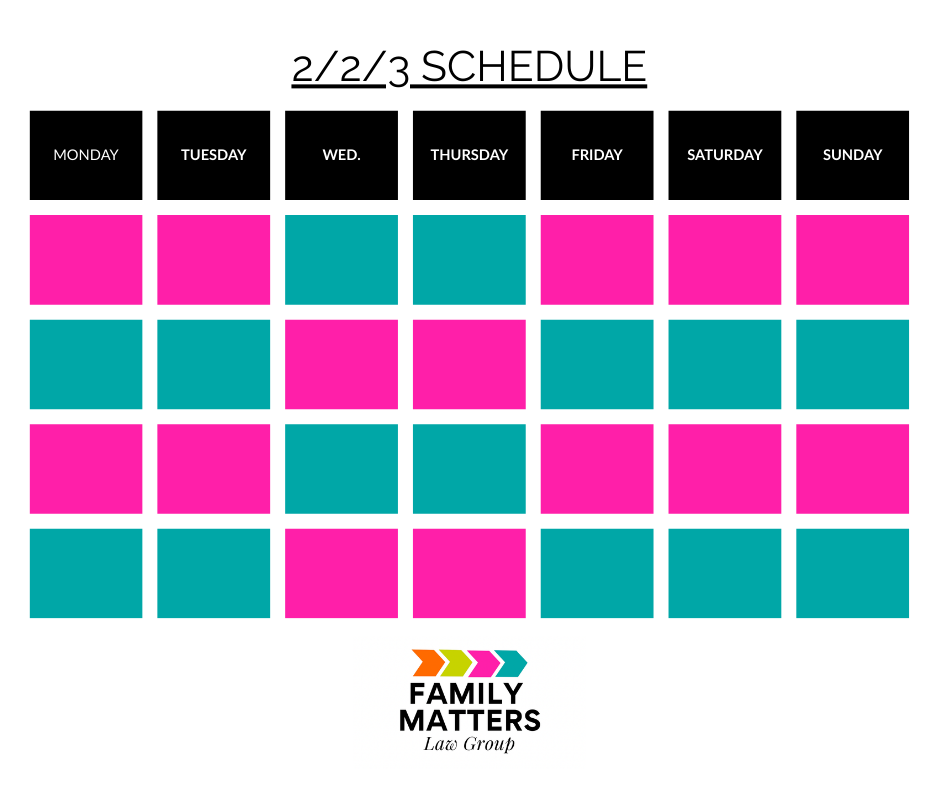
The 2/2/3 Schedule (Often Best for Small Children — With Caution)
This structure rotates throughout a two-week cycle so that no parent goes more than three days without seeing the child.
For toddlers and preschool-aged children, that frequent contact supports attachment bonds. Young children do not experience time the way adults do. Long separations can feel significant.
However, the 2/2/3 model rotates weekdays. Monday and Tuesday one week become Wednesday and Thursday the next. That lack of consistent weekday placement can create confusion if parents are not organized.
More importantly, it increases exchanges. More exchanges mean more interaction between parents. In cooperative coparenting relationships, that is manageable. In high-conflict situations, it can become emotionally draining for the child.
So while 2/2/3 is developmentally appropriate for small children, it must be weighed carefully against conflict levels.
Conflict Level Changes Everything
On paper, all three schedules are equal.
In real life, the number of transitions often determines emotional impact. High-conflict parents may benefit from fewer exchanges, which can make alternating weeks more protective in certain situations.
But fewer exchanges do not automatically override developmental needs. A toddler in a high-conflict case presents a complicated balancing act. The court's focus remains the child's best interests — not parental convenience or mathematical equality.
The Most Overlooked Issue: Children Grow
This is where many parenting plans fail.
Parents negotiate a schedule for a four-year-old and then lock themselves into it for the next decade. Childhood is not static. Development changes dramatically between preschool, elementary school, middle school, and high school.
If you do not build in language that anticipates change, you may later find yourself needing to file a Supplemental Petition for Modification. In Florida, a judge cannot modify a parenting plan without a properly filed modification action alleging a substantial, material, and unanticipated change in circumstances.
Litigating schedule changes is expensive. It is stressful. It is avoidable if parents plan ahead.
Parenting plans can include language that anticipates reevaluation at certain developmental milestones. They can include step-up provisions that transition from one structure to another as the child ages.
Failing to account for growth can leave families stuck with a schedule that no longer fits.
The Bottom Line
The 5/2 schedule often works well for school-aged children under 12 who benefit from consistent weekdays.
The 7/7 schedule often works best for teenagers and high-conflict cases where fewer exchanges reduce stress.
The 2/2/3 schedule supports attachment for small children but requires careful consideration in high-conflict dynamics because of frequent transitions and rotating weekdays.
Most importantly, a parenting plan should not freeze your child in time. Schedules should evolve as children develop. If you do not plan for change, the only path forward later may be litigation.
The goal is not equal math. The goal is long-term stability that adapts as your child grows.



Comments
There are no comments for this post. Be the first and Add your Comment below.
Leave a Comment